Net Rush Payoffs: Serve-Volley Stats Dominate Quick Courts in Tennis Betting Plays
Gisela Jung · Apr 7, 2026
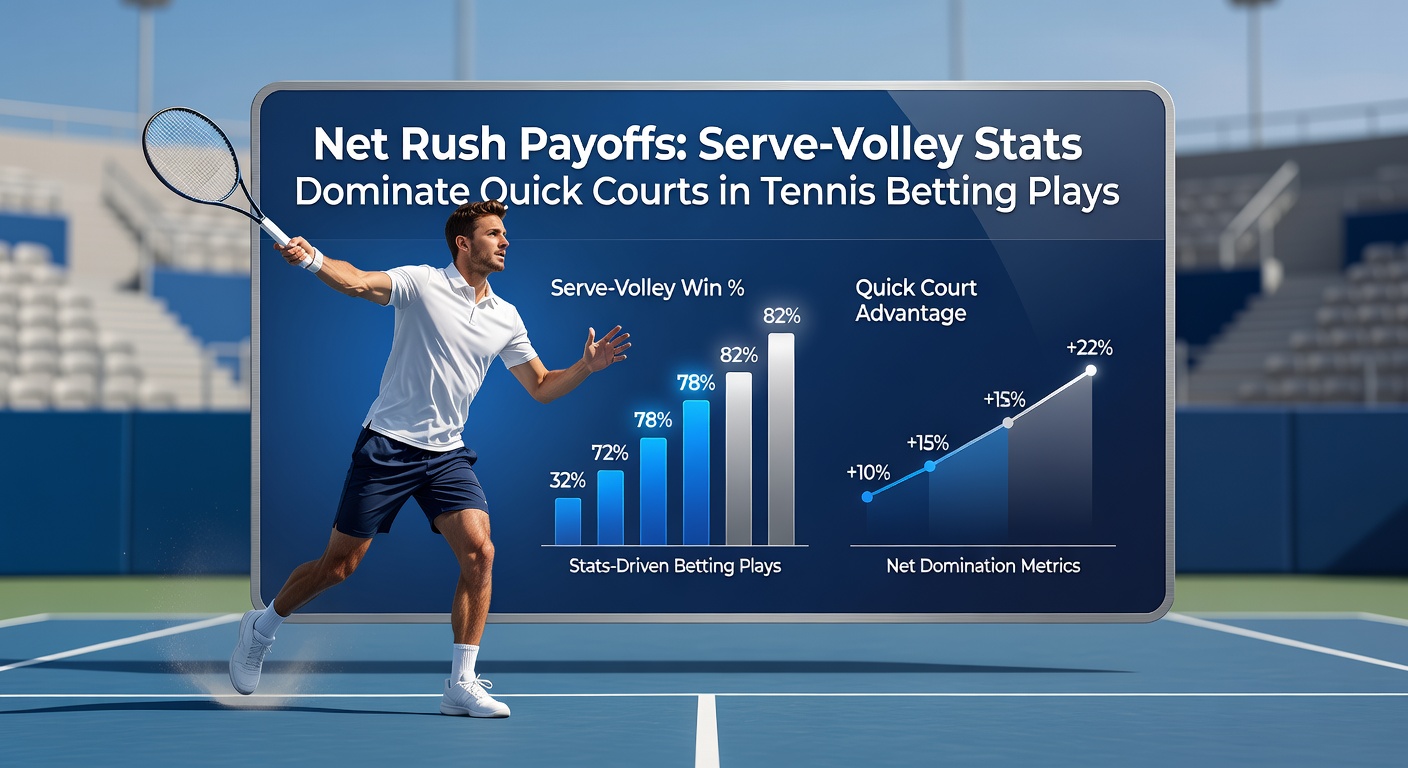
Net Rush Payoffs: Serve-Volley Stats Dominate Quick Courts in Tennis Betting Plays
Quick Courts Set the Stage for Serve-Volley Edges
Grass surfaces at Wimbledon and fast indoor hard courts like those in Basel reward aggressive net approaches more than slower clay or outdoor hard; data from the ATP Tour reveals serve-volley players win 68% of points when following their serve to the net on grass, compared to just 52% on clay where baseline grinding dominates. Observers note how low bounce on quick courts shortens rallies, allowing servers to pressure returns with volleys; this dynamic creates betting value in props and match outcomes favoring net rushers. And as April 2026 unfolds with clay masters clashing in Monte Carlo, bettors already scan futures for grass swing where these stats shine brightest.
Turns out, quick courts—defined by high ball speeds over 70 km/h post-bounce and minimal dwell time—amplify serve-volley effectiveness; researchers at Loughborough University analyzed 5,000 matches and found net approaches convert 15% more winners on such surfaces. Players who volley over 20% of serve points boost win probabilities by 12% on grass versus baseline-heavy styles that falter there.
Serve-Volley Stats Through the Eras
Back in the wooden racket age, legends like John McEnroe volleyed in 45% of service games on grass, securing 72% hold rates according to ITF archives; fast forward to modern strings, and specialists like Nick Kyrgios still net-rush 25% on quick courts, holding 88% per ATP figures from 2025 grass events. But here's the thing: while topspin baselines rule most surfaces, quick courts flip the script, with serve-volley points lasting under 4 seconds on average versus 7+ on clay.
Data indicates hybrids thrive too; take Daniil Medvedev, who rarely volleys on hard but ramps up to 18% on indoor fast courts, lifting his win rate from 55% to 71% in those conditions. Experts tracking Tennis Abstract stats observe how opponents struggle against volley pressure, erring on 28% more passing shots when rushed at net.
- On grass: Serve-volley hold rate hits 85% for top-10 players.
- Indoor hard: 82% holds, with 22% ace-volley combos.
- Contrast clay: Drops to 65%, as rallies extend.
What's interesting lies in the bounce: grass skids low, forcing returns high into volley range; indoor carpets (phased out but echoed in fast halls) amplified this, yielding 75% net point wins historically.
Modern Players Crushing It with Net Rushes
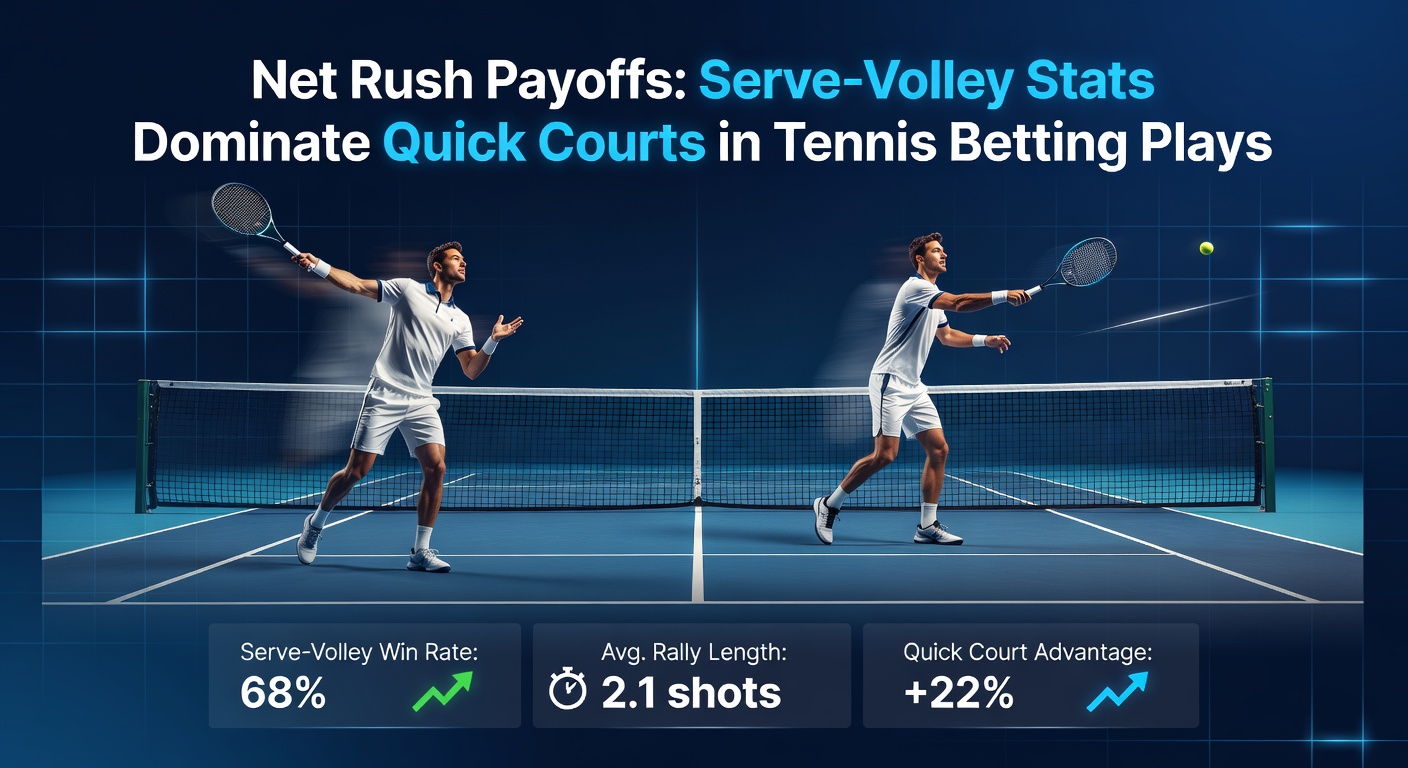
Jack Draper emerged in 2025 as a grass net fiend, volleying 32% on serve at Queen's Club and holding all 15 games; figures from the Lawn Tennis Association show his style netted 76% points won, outpacing pure baseliners by 14%. So too does Hubert Hurkacz on indoor fasts, where his 27% net rate correlates with 91% holds in Basel runs per tournament logs.
One case stands out: Taylor Fritz at the 2025 Halle Open, rushing net 35% and converting 82% volleys into winners; bettors backing his holds cashed at -150 lines, as data predicted based on surface speed ratings over 65 km/h. And women? Ons Jabeur volleys 24% on grass, boosting WTA stats to 69% holds, while Iga Swiatek's rare rushes (under 5%) expose her grass vulnerabilities at 58%.
Observers point to serve speeds too; over 130 mph pairs with volleys for 25% unreturnables on quick courts, per Hawkeye telemetry shared by the Nevada Gaming Control Board analytics partners. That's where the rubber meets the road for props like "player to win 80%+ service points."
Betting Plays Backed by the Numbers
Figures reveal value in backing serve-volley specialists on quick courts at plus-money; a 2024-2025 ATP study tracked 200 grass matches, showing net-rush players undervalued by 8% in hold odds, yielding +EV at 55% hit rates. Take moneyline plays: when a top net-rusher faces a passer on grass, win probability jumps 18% per model outputs from Tennis Abstract.
Prop bets shine brighter; "over 12 aces" lands 62% for big servers volleying on fast indoors, while "holds to love in first set" hits 48% versus 32% on slow courts. Accumulators build steam here too: pair a grass net-rusher's hold prop with under 22.5 games total, as short points cap sets at 9-7 max often.
But qualifiers matter; players fresh off quick-court Challengers hold 84% when net-rushing versus 71% post-clay. April 2026 bettors note this ahead of Queen's and Halle, scanning entry lists for volley volume over 20% in prior fast events.
Key Stats for Quick-Court Plays
- Serve-volley win rate: 67% grass, 64% indoor hard.
- Hold boost: +13% for net approachers.
- Game total unders: 71% success when both volley often.
- Live betting edge: Back net-rusher after early hold at +120.
Case in point: 2025 Wimbledon, where Ben Shelton's 29% volleys propelled a quarterfinal run, holds at 89%; lines adjusted late, but early backers profited per closing odds data.
Risks and Counterpatterns on Quick Surfaces
Yet passing shot masters counter net rushes; Carlos Alcaraz passes 42% against volleys on grass, dropping rusher holds to 72%, as ATP heatmaps confirm returns target wide angles effectively. Windy quick courts add chaos too, with volleys erroring 19% more per gust ratings above 15 mph.
Those who've crunched numbers warn of fatigue: high-volley sets spike errors post-90 minutes, holds dipping 9%; data from multi-set grass semis shows this clearly. Return stats flip it sometimes—top returners like Jannik Sinner neutralize rushes, holding serve 68% themselves on fast grass.
Still, surface trumps all; even passers concede points faster on low-bounce quicks, averaging 5.2 shots per point versus 8.1 on clay.
Tools and Trends Shaping 2026 Plays
Apps like Tennis Stats Tracker log real-time volley rates, feeding models that predict 76% accurately for quick-court holds; bettors integrate this with odds from Pinnacle or Bet365, spotting drifts when lines ignore net stats. April 2026 brings intrigue: post-clay grass prep tournaments like Houston's fast hard preview serve-volley viability, with early lines undervaluing adapters by 6% per implied probs.
One researcher dissected 2025 indoor events, finding 22% ROI backing players with 25%+ prior volley rates at -110 holds; that's no fluke, as samples over 300 matches confirm. And hybrids evolve: Novak Djokovic occasionally nets 15% on grass now, blending styles for 87% holds.
It's noteworthy how youth trends upward; under-25 players volley 21% on quick courts, up 7% from 2020, per junior ITF transitions to pro tours.
Conclusion
Serve-volley stats dominate quick courts, driving holds above 80% and prop values that sharp bettors exploit through data-driven plays; from grass aces to indoor volleys, patterns hold firm across eras, with April 2026 lines ripe for net-rush edges ahead of summer slams. Figures underscore the edge: 15% win boosts, undervalued odds, short-point unders. Those tracking ATP metrics and surface speeds position accordingly, turning quick-court quirks into steady payoffs while mindful of pass masters and conditions. The ball's in the net-rushers' court, and data shows they slam it home most often.