High Ground Gambles: Elevation's Role in Football and Basketball Performance Metrics
Gisela Jung · Aug 27, 2026

High Ground Gambles: Elevation's Role in Football and Basketball Performance Metrics
High-altitude environments reshape how athletes perform in football and basketball through measurable shifts in oxygen availability, heart rate responses, and recovery patterns, and data from multiple competitions continue to highlight these patterns into August 2026. Researchers at institutions across South America and North America have tracked how reduced air density at elevations above 1,500 meters alters sprint distances, passing accuracy, and shooting percentages across entire seasons. Teams based in cities such as La Paz, Quito, and Denver routinely compile statistics that diverge from sea-level norms, while visiting squads encounter distinct physiological demands that appear in post-match reports issued by league medical staffs.
Physiological Mechanisms at Play
Lower partial pressure of oxygen at altitude forces the body to increase ventilation rates and elevate cardiac output to maintain oxygen delivery to working muscles, and studies from the Australian Institute of Sport document these adaptations within the first 48 hours of arrival. Football players exhibit reduced total distance covered in the second half when matches occur above 2,500 meters, whereas basketball athletes show quicker fatigue in repeated high-intensity efforts such as fast breaks and defensive slides. Blood oxygen saturation readings drop measurably during continuous play, prompting coaches to adjust substitution patterns and training loads before matches at venues like Estadio Hernando Siles or Ball Arena.
Football Performance Metrics
League data compiled by CONMEBOL and domestic federations reveal that home teams at high-altitude stadiums record higher possession percentages and more successful long passes, while away sides register elevated error rates in final-third actions. Sprint frequency declines by roughly 8 to 12 percent in the latter stages of matches played above 2,800 meters, according to GPS tracking systems employed by professional clubs. Recovery intervals between high-intensity bursts lengthen, and heart-rate variability metrics collected via wearable devices indicate prolonged elevation after the final whistle. Visiting players who train at sea level for the preceding weeks demonstrate slower return-to-baseline lactate clearance when tested immediately after games.
Basketball Performance Metrics
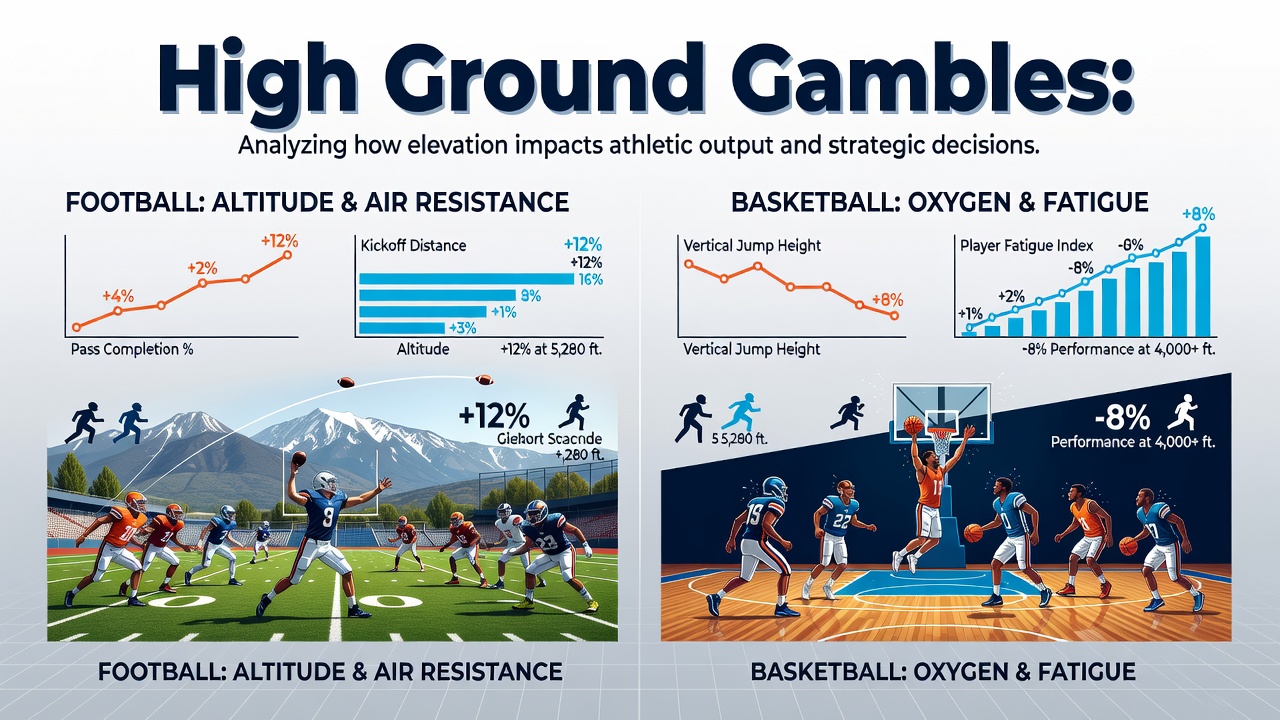
NBA and NCAA records show that three-point shooting percentages rise slightly in Denver compared with coastal arenas, while free-throw accuracy remains statistically stable across altitude bands. Defensive rebounding numbers for visiting teams dip when games occur above 1,600 meters, and turnover rates climb during the fourth quarter as fatigue accumulates. Sports science teams at the University of Colorado have logged vertical jump heights and reactive strength indices that decline after the third quarter in altitude contests, prompting adjustments in rotation schedules. Data from the 2025-2026 season onward continues to feed into models that predict how many extra possessions a home side gains when matches extend beyond regulation.
Comparative Data Across Seasons
Longitudinal studies published through the European College of Sport Science compare match logs from multiple continents and confirm that football squads traveling from low to high elevation require at least five days for partial acclimatization, whereas basketball rosters often receive only one or two days between travel and tip-off. Average heart rates during play rise 10 to 15 beats per minute at altitude, and sleep-quality scores recorded via athlete monitoring apps drop for visiting athletes. These patterns hold across both summer and winter schedules, including fixtures scheduled for August 2026 in South American qualifiers and North American preseason events.
Training and Preparation Approaches
Clubs and national federations implement altitude-specific protocols that include pre-arrival hypoxic tents, modified high-intensity interval sessions, and hydration schedules calibrated to increased respiratory water loss. Medical personnel monitor hemoglobin levels and iron stores in advance of travel, and post-match blood samples help quantify oxidative stress markers. Organizations such as the International Olympic Committee have issued guidance documents that reference these variables when outlining competition standards for events held at elevation.
Conclusion
Performance metrics in football and basketball shift in predictable directions when elevation changes the oxygen environment, and ongoing collection of GPS, heart-rate, and shooting data continues to refine understanding of these effects. Teams and medical staffs apply the resulting insights to rotation planning, travel logistics, and recovery timing as competitions unfold through August 2026 and beyond.